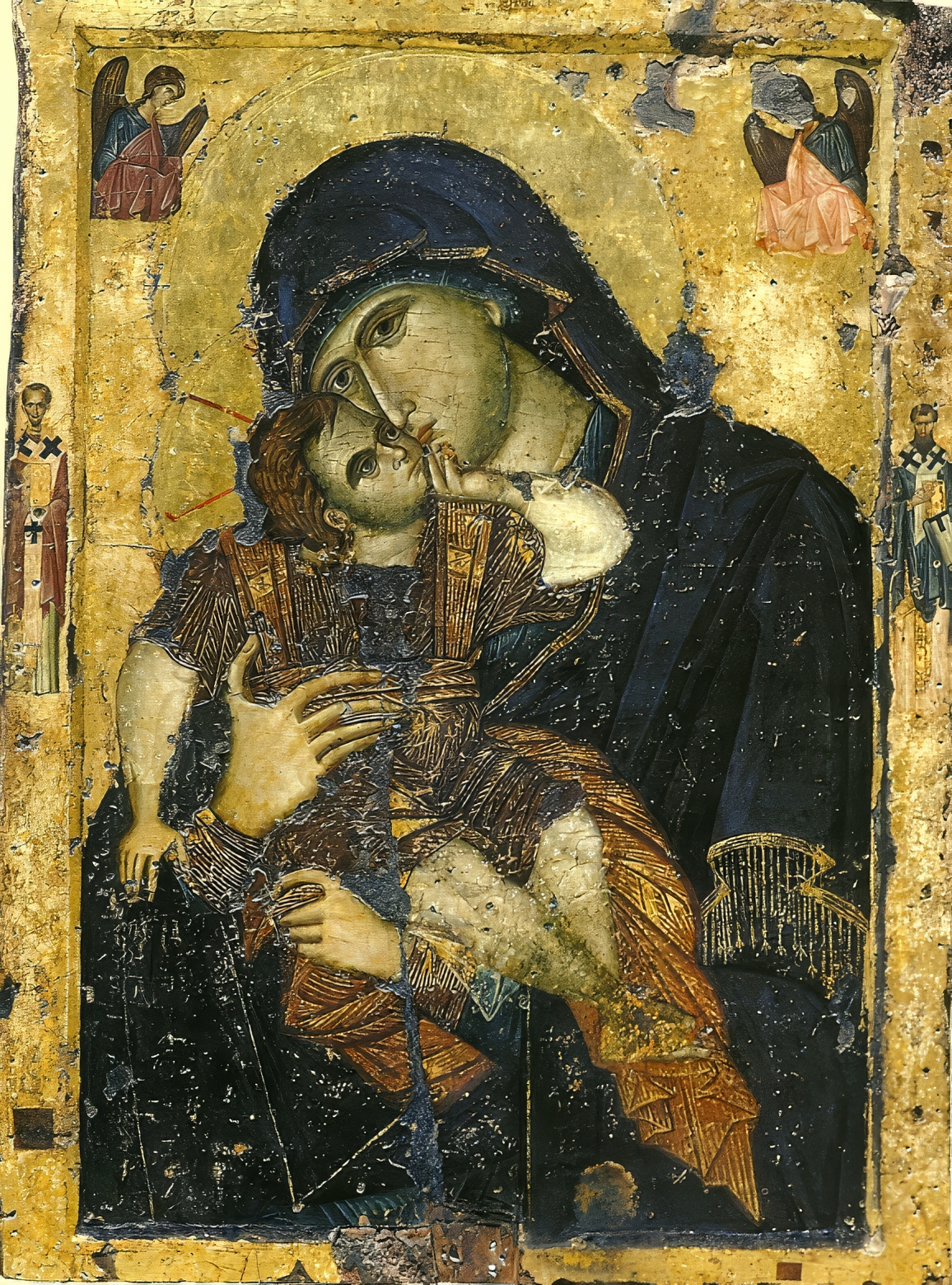
ΠΑΝΑΓΙΑ ΓΛΥΚΟΦΙΛΟΥΣΑ
Η εικόνα της Παναγίας Γλυκοφιλούσας αποτελεί χαρακτηριστικό παράδειγμα της ορθόδοξης εικονογραφικής παράδοσης, όπου η θεολογική σημασία συνυφαίνεται με την αισθητική έκφραση. Η φορητή εικόνα, έργο «δια χειρός Δημητρίου Αντωνοπούλου», η οποία φυλάσσεται στην Ιερά Μονή Μεταμορφώσεως Σωτήρος – Σαγματά, αποδίδει τη Θεοτόκο να κρατά στην αγκαλιά της τον Χριστό, τον Θεάνθρωπο Λόγο, σε μια σύνθεση που εκφράζει τη μητρική τρυφερότητα και τη θεολογική αλήθεια της Ενανθρώπησης.
Η χρήση των ήπιων χρωματικών τόνων, η συγκρατημένη φωτοσκίαση και η απουσία διακοσμητικής υπερβολής συμβάλλουν στη δημιουργία μιας ατμόσφαιρας εσωτερικής περισυλλογής. Η ελαφρά κλίση της κεφαλής της Θεοτόκου και η στενή σωματική επαφή με τον Χριστό υπογραμμίζουν τη σχέση κοινωνίας και αγάπης μεταξύ Μητέρας και Υιού. Ο φωτοστέφανος λειτουργεί ως εικονογραφικό στοιχείο θείας δόξας, παραπέμποντας στο «Ο ΩΝ» και στην αιώνια υπόσταση του Χριστού. Σύμφωνα με την αγιορείτικη παράδοση, η εικόνα συνδέεται με θαυμαστά γεγονότα και θεωρείται αμφιπρόσωπη, καθώς στην πίσω πλευρά απεικονίζεται η Σταύρωση, υποδηλώνοντας τη στενή σχέση μεταξύ της χαράς της Ενανθρώπησης και του σωτηριολογικού γεγονότος του Πάθους. Η παράδοση αναφέρει ότι διασώθηκε κατά την περίοδο της Εικονομαχίας και έφθασε θαυματουργικά στις ακτές του Αγίου Όρους, όπου τιμήθηκε από την Ιερά Μονή Φιλοθέου. Η εικόνα αποτελεί, επομένως, σημείο συνάντησης ιστορικής μνήμης, θεολογικού συμβολισμού και πνευματικής εμπειρίας.
[Πηγές: amarysia.gr, monastiriaka.gr]
PANAGIA GLYKOFILOUSA (THE VIRGIN OF TENDERNESS)
The icon of the Virgin Mary Glykofilousa is a prime example of the Orthodox iconographic tradition, in which theological significance is interwoven with aesthetic expression. The portable icon, a work “by the hand of Dimitrios Antonopoulos,” which is housed at the Holy Monastery of the Transfiguration of the Savior – Sagmata, depicts the Theotokos holding Christ, the God-Man and the Word, in her arms, in a composition that expresses maternal tenderness and the theological truth of the Incarnation.
The use of soft color tones, subdued shading, and the absence of decorative excess contribute to the creation of an atmosphere of inner contemplation. The slight tilt of the Virgin Mary’s head and her close physical contact with Christ underscore the bond of communion and love between Mother and Son. The halo serves as an iconographic element of divine glory, referring to “The One Who Is” and to the eternal essence of Christ. According to Mount Athos tradition, the icon is associated with miraculous events and is considered double-sided, as the Crucifixion is depicted on the reverse side, signifying the close connection between the joy of the Incarnation and the salvific event of the Passion. Tradition holds that it was preserved during the Iconoclastic period and miraculously arrived on the shores of Mount Athos, where it was venerated by the Holy Monastery of Philotheou. The icon thus serves as a convergence point of historical memory, theological symbolism, and spiritual experience.