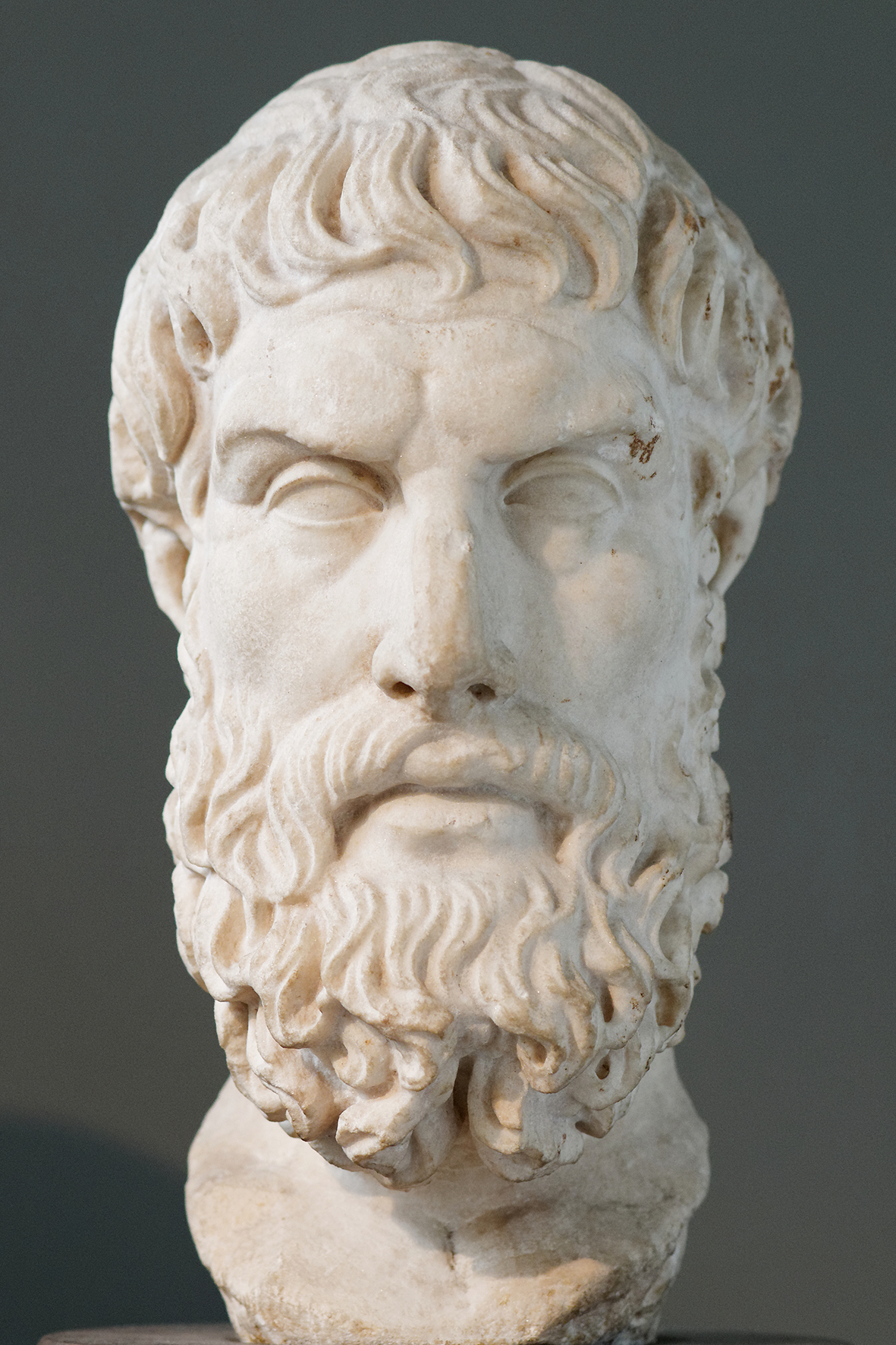
ΕΠΙΚΟΥΡΟΣ
Ο Επίκουρος γεννήθηκε το 341 π.Χ. στη Σάμο, από Αθηναίους γονείς αποίκους, τον Νεοκλή και τη Χαιρεστράτη. Η πρώιμη επαφή του με τη φιλοσοφική σκέψη, ιδιαίτερα μέσω του Ναυσιφάνη και της ατομικής θεωρίας του Δημόκριτου, διαμόρφωσε τη μετέπειτα κοσμοθεωρία του και τον απομάκρυνε από την πλατωνική μεταφυσική. Σε ηλικία δεκαοκτώ ετών μετέβη στην Αθήνα, όπου έζησε σε μια περίοδο έντονων πολιτικών ανακατατάξεων μετά τον θάνατο του Μεγάλου Αλεξάνδρου. Μετά την εκδίωξη της οικογένειάς του από τη Σάμο, εγκαταστάθηκε στην Κολοφώνα, ενώ αργότερα δίδαξε στη Μυτιλήνη και στη Λάμψακο. Το 306 π.Χ. επέστρεψε στην Αθήνα και ίδρυσε τον Κήπο, μια φιλοσοφική κοινότητα βασισμένη στη φιλία, την ισότητα και τη βιωματική άσκηση της φιλοσοφίας. Κεντρικός σκοπός της επικούρειας διδασκαλίας ήταν η επίτευξη της ευδαιμονίας μέσω της αταραξίας και της απουσίας σωματικού πόνου. Η ηδονή δεν ταυτιζόταν με την υπερβολική απόλαυση, αλλά με την ψυχική γαλήνη και την ελευθερία από φόβους, ιδιαίτερα από τον φόβο του θανάτου και των θεών. Η υλιστική του φυσική, βασισμένη στην κίνηση των ατόμων, επιδίωκε μια ορθολογική ερμηνεία του κόσμου. Ο Επίκουρος πέθανε το 270 π.Χ., αφήνοντας σημαντική φιλοσοφική κληρονομιά που επηρέασε βαθιά την ιστορία της ηθικής σκέψης.
[Πηγές: users.sch.gr, publications.upatras.gr, lecturesbureau.gr]
EPICURUS
Epicurus was born in 341 B.C. on the island of Samos to Athenian colonist parents, Neocles and Chaerestrate. His early exposure to philosophical thought, particularly through the teachings of Nausiphanes and the atomic theory of Democritus, shaped his later worldview and distanced him from Platonic metaphysics. At the age of eighteen, he traveled to Athens, where he lived during a period of intense political upheaval following the death of Alexander the Great. After his family was expelled from Samos, he settled in Colophon and later taught in Mytilene and Lampsacus. In 306 B.C., he returned to Athens and founded the Garden, a philosophical community based on friendship, equality, and the practical application of philosophy. The central aim of Epicurean teaching was the attainment of eudaimonia through ataraxia and the absence of physical pain. Pleasure was not understood as excessive indulgence, but rather as peace of mind and freedom from fears, especially the fear of death and the gods. His materialist philosophy of nature, based on the motion of atoms, sought to provide a rational interpretation of the world. Epicurus died in 270 B.C., leaving behind a significant philosophical legacy that profoundly influenced the development of ethical thought.