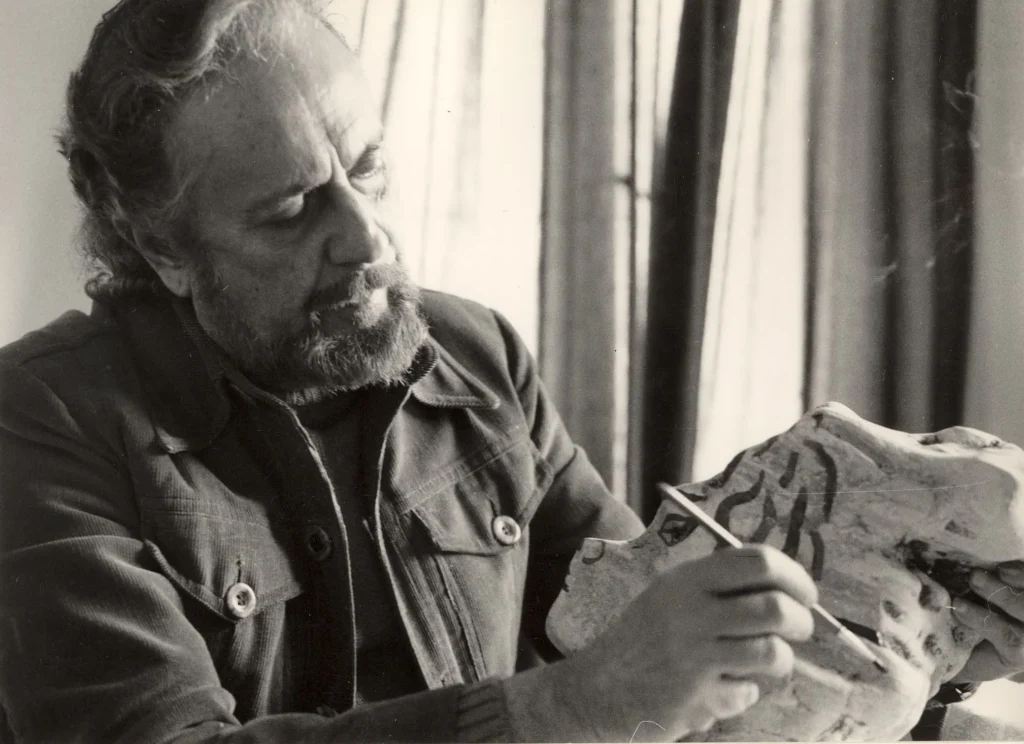
ΓΙΑΝΝΗΣ ΡΙΤΣΟΣ
Ο Γιάννης Ρίτσος γεννήθηκε στη Μονεμβασιά την 1η Μαΐου 1909, και αναδείχθηκε ως ένας από τους σημαντικότερους Έλληνες ποιητές του 20ού αιώνα. Προερχόμενος από οικογένεια μεγαλοκτηματιών, υπήρξε το τέταρτο παιδί του Ελευθερίου Ρίτσου και της Ελευθερίας Βουζουναρά. Η παιδική του ηλικία σημαδεύτηκε από την οικονομική καταστροφή της οικογένειας και την απώλεια του μεγαλύτερου αδελφού του, Μίμη, και της μητέρας του από φυματίωση το 1921. Μετά την αποφοίτησή του από το Γυμνάσιο στο Γύθειο το 1925, μετακόμισε στην Αθήνα, όπου εργάστηκε σε διάφορες θέσεις για να επιβιώσει. Το 1926 προσβλήθηκε από φυματίωση και νοσηλεύτηκε σε διάφορα σανατόρια, όπως το «Σωτηρία» στην Αθήνα και το Άσυλο Φυματικών Καψαλώνας στην Κρήτη. Η ποίησή του εμφανίστηκε το 1924 με το ψευδώνυμο «Ιδανικόν Όραμα» στο περιοδικό «Διάπλασις των Παίδων». Το 1934 δημοσίευσε την πρώτη του ποιητική συλλογή, «Η Σονάτα του Σεληνόφωτος», που τον καθιέρωσε στη λογοτεχνική σκηνή. Κατά τη διάρκεια της Κατοχής, εντάχθηκε στο ΕΑΜ και συμμετείχε ενεργά στους κοινωνικούς και πολιτικούς αγώνες της εποχής. Μετά τον Εμφύλιο, υπήρξε πολιτικός εξόριστος σε διάφορα στρατόπεδα συγκέντρωσης. Παρά τις δυσκολίες, συνέχισε να γράφει και να δημιουργεί, με έργα που εκφράζουν την αντίσταση, την ελπίδα και την κοινωνική δικαιοσύνη. Το 1975 προτάθηκε για το Βραβείο Νόμπελ Λογοτεχνίας. Ο Ρίτσος υπήρξε μέλος της «Γενιάς του ’30», με έργα που συνδυάζουν τον λυρισμό με την κοινωνική και πολιτική διάσταση. Το έργο του διακρίνεται για τη λυρική ένταση, τον πολιτικό παλμό, την ποικιλία μορφών και την έκφραση της συλλογικής μνήμης. Ποιήματα όπως Ρωμιοσύνη, Μακρυνισιώτικα, Δεκαοχτώ λιανοτράγουδα της πικρής πατρίδας και πολλά άλλα έχουν μεταφραστεί σε δεκάδες γλώσσες και συνεχίζουν να εμπνέουν αναγνώστες παγκοσμίως. Πέθανε στην Αθήνα στις 11 Νοεμβρίου 1990, αφήνοντας πίσω του πλούσια πολιτιστική κληρονομιά και βαθιά επίδραση στον ελληνικό και παγκόσμιο ποιητικό λόγο.
(απόσπασμα) Σονάτα του Σεληνόφωτος (1956), Γιάννης Ρίτσος
Ἄφησέ με νἄρθω μαζί σου. Τί φεγγάρι ἀπόψε!
Εἶναι καλό τό φεγγάρι, — δέ θά φαίνεται
πού ἀσπρίσαν τά μαλλιά μου. Τό φεγγάρι
θά κάνει πάλι χρυσά τά μαλλιά μου. Δέ θά καταλάβεις.
Ἄφησέ με νἄρθω μαζί σου.
Ὅταν ἔχει φεγγάρι μεγαλώνουν οἱ σκιές μές στό σπίτι,
ἀόρατα χέρια τραβοῦν τίς κουρτίνες,
ἕνα δάχτυλο ἀχνό γράφει στή σκόνη τοῦ πιάνου
λησμονημένα λόγια — δέ θέλω νά τ’ ἀκούσω. Σώπα.
[ΠΗΓΗ: ebooksdl.cti.gr]
GIANNIS RITSOS
Yannis Ritsos was born in Monemvasia on May 1, 1909, and became one of the most influential Greek poets of the twentieth century. Born into a family of wealthy landowners, he was the fourth child of Eleftherios Ritsos and Eleftheria Vouzounara. His childhood was overshadowed by financial hardship and personal tragedy: in 1921, both his mother and his elder brother, Dimitris (“Mimis”), died of tuberculosis, while his father later suffered from mental illness. After graduating from high school in Gythio in 1925, Ritsos moved to Athens, where he worked various jobs to support himself. In 1926, he contracted tuberculosis and spent several years in sanatoria, including the Sotiria Hospital in Athens and the Kapsalona Sanatorium in Crete. His first published poem appeared in 1924, under the pseudonym “Ideal Vision,” in the children’s magazine Diáplasis ton Paídon. In 1934, he published his first poetry collection, Tractor, marking the beginning of his remarkable literary career. During the German Occupation, Ritsos joined the National Liberation Front (EAM) and became actively involved in the political and social struggles of the period. After the Greek Civil War, he was arrested and exiled to a series of prison camps on the islands of Limnos, Makronisos, and Agios Efstratios. Despite persecution and censorship, he continued to write prolifically, producing works that expressed resistance, hope, and social justice.
In 1975, he was nominated for the Nobel Prize in Literature. A leading member of Greece’s “Generation of the 1930s,” Ritsos combined lyrical sensitivity with powerful social and political themes. His poetry is distinguished by its emotional depth, symbolic richness, formal diversity, and enduring engagement with collective memory. Works such as Romiosyni, Makronisiotika, Eighteen Little Songs of the Bitter Homeland, and Moonlight Sonata have been translated into dozens of languages and continue to inspire readers around the world. Yannis Ritsos died in Athens on November 11, 1990, leaving behind one of the richest and most influential bodies of work in modern Greek literature.
(excerpt from a poem) Moonlight Sonata (1956), Yannis Ritsos.
Let me come with you. What a moon tonight!
The moon is beautiful—but it will not reveal
that my hair has turned white. The moon
will gild my hair once more. You would not understand.
Let me come with you.
When the moon is out, the shadows lengthen inside the house;
invisible hands draw the curtains,
a delicate finger writes in the dust upon the piano
forgotten words—I want to hear them. Hush.