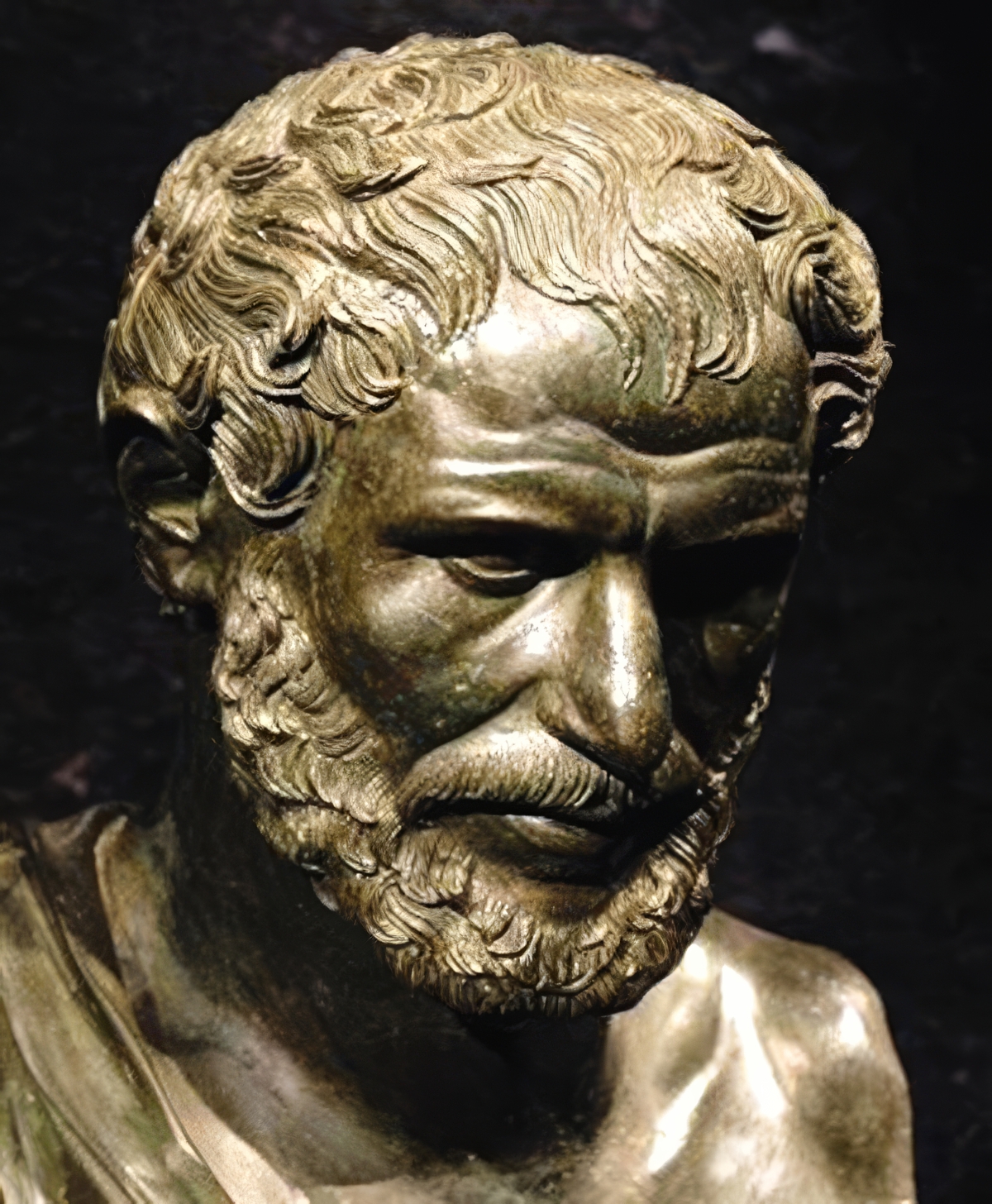
ΗΡΑΚΛΕΙΤΟΣ
Ο Ηράκλειτος ο Εφέσιος (περ. 540–480 π.Χ.) υπήρξε ένας από τους σημαντικότερους προσωκρατικούς φιλοσόφους και επηρέασε βαθιά την εξέλιξη της δυτικής φιλοσοφίας. Γνωστός ως ο «σκοτεινός φιλόσοφος» λόγω του πυκνού και αινιγματικού ύφους του, υποστήριξε ότι το βασικό χαρακτηριστικό του κόσμου είναι η συνεχής μεταβολή. Η πιο γνωστή του ρήση, «Πάντα ῥεῖ» («Όλα ρέουν»), εκφράζει την ιδέα ότι τίποτα δεν παραμένει σταθερό και ότι τα πάντα βρίσκονται σε διαρκή αλλαγή. Παράλληλα, τόνιζε πως «Δεν μπορεί κανείς να μπει δύο φορές στο ίδιο ποτάμι», γιατί τόσο το ποτάμι όσο και ο άνθρωπος μεταβάλλονται συνεχώς. Ο Ηράκλειτος πίστευε επίσης ότι η αρμονία γεννιέται μέσα από την αντίθεση των αντιθέτων, όπως υποδηλώνει η φράση «Πόλεμος πάντων μὲν πατήρ ἐστι», εννοώντας ότι η σύγκρουση αποτελεί κινητήρια δύναμη της εξέλιξης. Κεντρική θέση στη φιλοσοφία του κατέχει και ο Λόγος, η παγκόσμια λογική αρχή που διέπει το σύμπαν. Οι ιδέες του παραμένουν διαχρονικές, εμπνέοντας τη φιλοσοφία, την επιστήμη και τον σύγχρονο τρόπο σκέψης.
HERACLITUS
Heraclitus of Ephesus (c. 540–480 B.C.) was one of the most influential Presocratic philosophers and had a profound impact on the development of Western philosophy. Known as the “Obscure Philosopher” because of his dense and enigmatic writing style, he argued that the defining characteristic of the universe is constant change. His most famous saying, “Panta Rhei” (“Everything flows”), expresses the idea that nothing remains permanent and that everything exists in a continuous state of flux. Likewise, he maintained that “No one ever steps into the same river twice,” because both the river and the individual are constantly changing. Heraclitus also believed that harmony emerges from the tension between opposites, as reflected in his famous statement, “War is the father of all things,” meaning that conflict is the driving force behind change and development. Central to his philosophy is the concept of the Logos, the universal rational principle that governs the cosmos. His ideas have remained timeless, continuing to inspire philosophy, science, and modern thought.