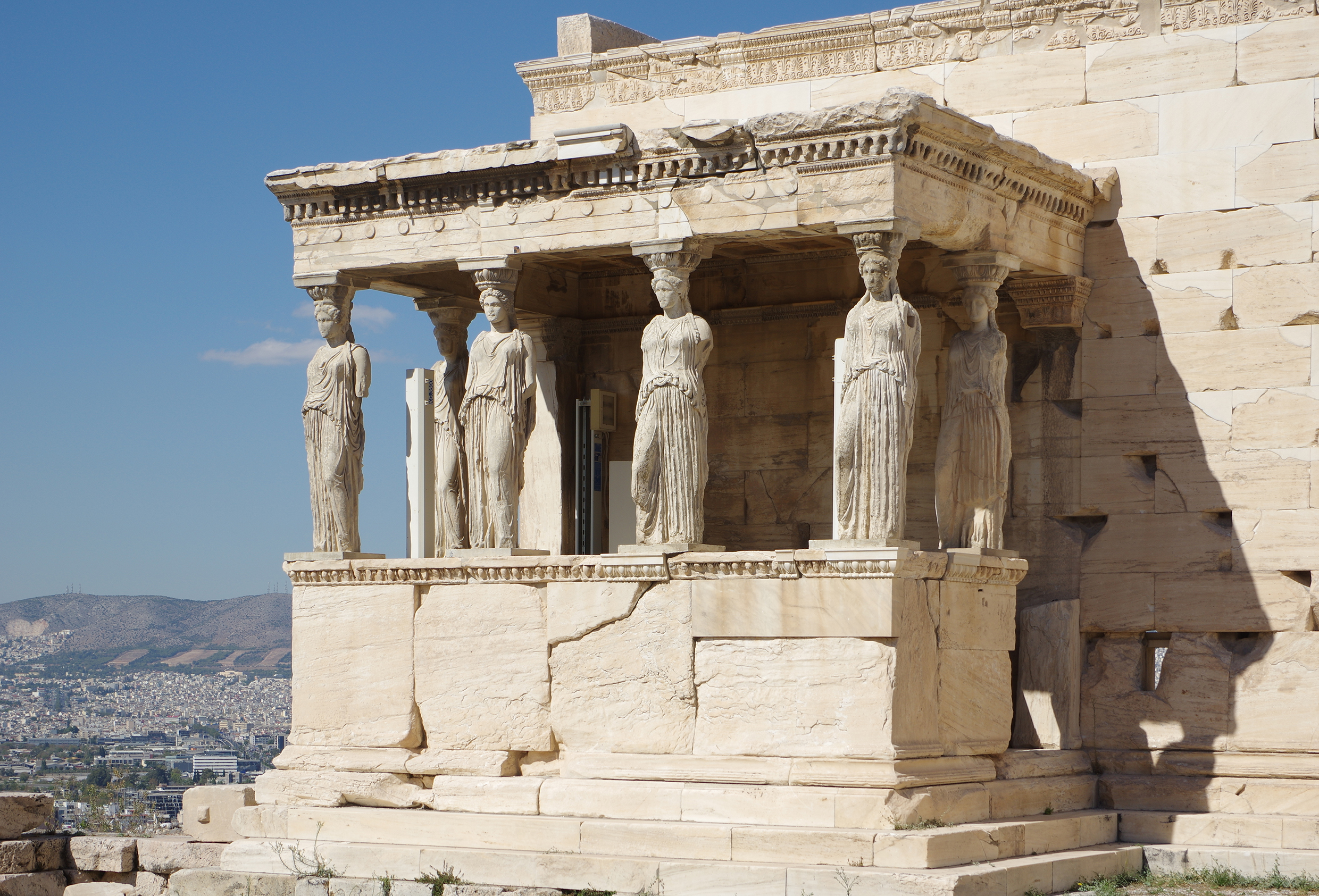
ΚΑΡΥΑΤΙΔΕΣ
Η προέλευση των Καρυάτιδων είναι αβέβαιη αφού διαφορετικές πηγές αναφέρουν διαφορετικές ιστορίες για την προέλευση τους. Ο Βιτρούβιος υποστηρίζει ότι ήταν οι γυναίκες από τις Καρυές, πόλη που κατέστρεψε η ελληνική συμμαχία κατά τους περσικούς πολέμους λόγω της βοήθειας τους στους Πέρσες. Οι γυναίκες της πόλης υποδουλώθηκαν και αναγκάστηκαν να σηκώνουν με το κεφάλι τους καθημερινά τα πολυτελή ενδύματα και κοσμήματα τους. Σύμφωνα με τον Ρωμαίο συγγραφέα, οι αρχιτέκτονες εμπνεύστηκαν από τις υπόδουλες δημιουργώντας κίονες με την μορφή τους. Από την άλλη πηγές αναφέρουν τις Καρυάτιδες, ως μνημεία στον τάφο του Κέκροπα που υπήρχε στο Ερεχθείο διπλά στον Παρθενώνα, απεικονίζοντας 6 χοηφόρους, δηλαδή γυναίκες που κουβαλούσαν κρασί προς τιμήν του νεκρού βασιλιά Κέκροπα. Αν και Καρυάτιδες έχουν βρεθεί σε πολλές πόλεις του αρχαίου ελληνισμού, συνήθως σε τάφους, αυτές που βρίσκονταν στο Ερεχθείο είναι οι πιο γνωστές, κυρίως ξετιμάς της “απαγωγής” της 6ης Καρυάτιδος (Κόρη C) από τον Thomas Bruce, λόρδο του Ελγιν, το 1804 και εκτίθεται μαζί με άλλα μέρη του Παρθενώνα στο Βρετανικό Μουσείο του Λονδίνου. Οι υπόλοιπες Καρυάτιδες προστατεύονται στο Νέο Μουσείο της Ακρόπολης, στην Αθήνα. Ενώ στην θέση τους στο μνημείο έχουν τοποθετηθεί πιστά αντίγραφα.
[Πηγές: www.mixanitouxronou.gr, www.theacropolismuseum.gr]
CARYATIDES
The origin of the Caryatids remains uncertain, as ancient sources offer different accounts of their origins. According to Vitruvius, the Caryatids represent the women of Caryae, a city in Laconia that, according to his account, was destroyed by the Greeks during the Persian Wars because it had allied itself with the Persians. The women of the city were enslaved and forced to bear their luxurious garments and jewelry on their heads as a symbol of their subjugation. According to the Roman author, architects drew inspiration from these women and created columns in their likeness. Other sources associate the Caryatids of the Erechtheion with the tomb of the mythical King Cecrops, which was believed to be located at the site of the monument. According to this interpretation, the six figures represent choephoroi—women carrying libations in honor of the deceased king. Although Caryatids have been found in many cities throughout the ancient Greek world, primarily in funerary monuments, those of the Erechtheion are the best known. Their fame is due largely to the removal of the sixth Caryatid (Caryatid C) by Thomas Bruce, 7th Earl of Elgin, between 1801 and 1804. The sculpture is currently displayed, together with other sculptures from the Parthenon, in the British Museum in London. The remaining five Caryatids are housed in the Acropolis Museum in Athens, while faithful replicas have been installed in their original positions on the Erechtheion.