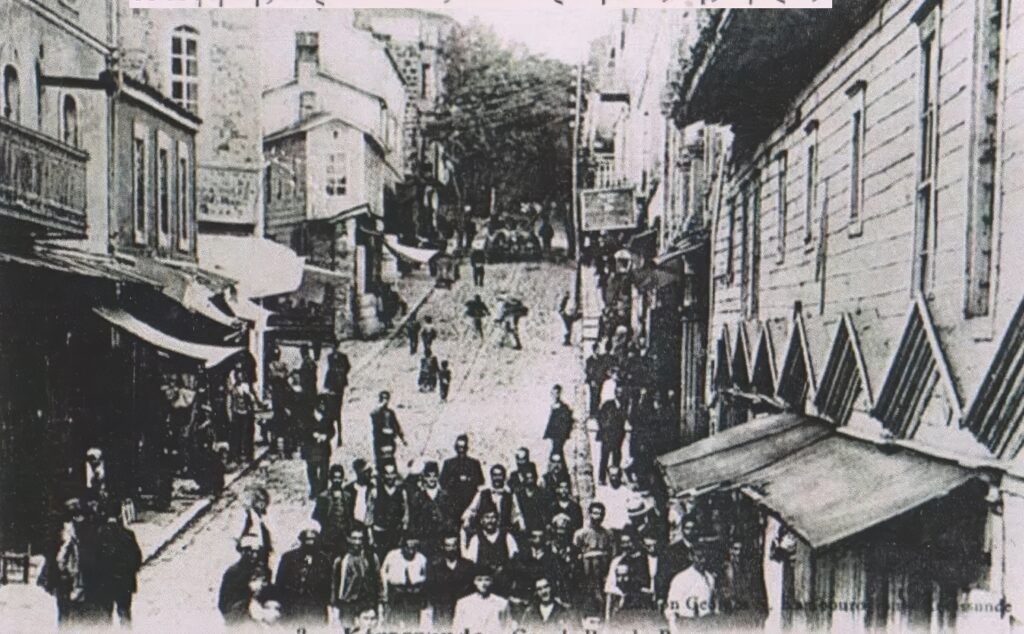
ΚΕΡΑΣΟΥΝΤΑ
Η Κερασούντα, μία από τις σημαντικότερες ελληνικές πόλεις του Πόντου, υπήρξε στις αρχές του 20ού αιώνα ένα ακμαίο εμπορικό και πνευματικό κέντρο στις ακτές του Εύξεινου Πόντου. Χάρη στο λιμάνι της και το εμπόριο φουντουκιών, ανέπτυξε στενούς δεσμούς με μεγάλα ευρωπαϊκά λιμάνια, αποκτώντας έντονο κοσμοπολίτικο χαρακτήρα. Σύμβολο της οικονομικής και κοινωνικής ακμής της ελληνικής κοινότητας ήταν η περίφημη «Λέσχη των Φίλων» (Cercle de Giresun), ένας χώρος συνάντησης της ελληνικής αστικής τάξης, όπου καλλιεργούνταν οι ευρωπαϊκές ιδέες, η παιδεία και οι επιχειρηματικές σχέσεις. Στη Λέσχη οργανώνονταν πολιτιστικές εκδηλώσεις, μουσικές βραδιές και χοροί, ενώ παράλληλα λαμβάνονταν σημαντικές αποφάσεις για τη ζωή της κοινότητας. Επιφανείς ελληνικές οικογένειες, έμποροι και πλοιοκτήτες συνέβαλαν καθοριστικά στην οικονομική και πολιτιστική ανάπτυξη της πόλης. Η λαμπρή αυτή πορεία διακόπηκε βίαια με τους διωγμούς των Ελλήνων του Πόντου, τη Γενοκτονία και την Ανταλλαγή των Πληθυσμών το 1923. Παρά τον ξεριζωμό, η Κερασούντα παραμένει ζωντανή στη μνήμη των απογόνων της ως σύμβολο του ποντιακού ελληνισμού και της μακραίωνης παρουσίας του στον Εύξεινο Πόντο.
Κερασούντα και Σαμψούντα
Δύο πουλόπα άκλερα
μαύρα και φτουλιγμένα
κάθουνταν και μοιρολογούν
λερά και ματωμένα
Λαλούνε και μοιρολογούν
μ’ ανθρώπινη λαλίαν
Κακόν αΐκον ’κ’ είδανε
τ’ ομμάτι͜α μ’ αλλομίαν
Κερασούντα και Σαμψούντα
και το τσ̌όλ’ η Τραπεζούντα
Ποτάμ’ τρέχ’νε τα γαίματα,
ποτάμι͜α και τα δάκρυ͜α
Εγόμωσαν κι εθόλωσαν
όλι͜α τα θαλασσάκρι͜α
Έσπαξαν και κατέσπαξαν
οι Τούρκ’ με τα μαχ̌αίρι͜α
Μωρά επέραν κι έκοψαν
ας ση μάνας τα χ̌έρι͜α
Τα παλληκάρι͜α εκρέμασαν,
έσπαξαν τοι ποπάδες
Σα εκκλησίας έκαψαν
μωρά και γεροντάδες
Κερασούντα και Σαμψούντα
και το τσ̌όλ’ η Τραπεζούντα
Ποτάμ’ τρέχ’νε τα γαίματα
ποτάμι͜α και τα δάκρυ͜α
Εγόμωσαν κι εθόλωσαν
όλι͜α τα θαλασσάκρι͜α
Τ’ ασκέρι͜α τη Τοπάλ Οσμάν
ατά ’κ’ έχ’νε καρδίαν
Ούλια τ’ εκέσ’ εγόμωσαν
κορμία δίχως ψ̌ήα
Θερία άγρι͜α ανήμερα
αρπάζ’νε και τσερίζ’νε
Τ’ ανήμπορους και τα μωρά
άμον χορτάρ’ θερίζ’νε
Κερασούντα και Σαμψούντα
και το τσ̌όλ’ η Τραπεζούντα
Ποτάμ’ τρέχ’νε τα γαίματα
ποτάμι͜α και τα δάκρυ͜α
Εγόμωσαν κι εθόλωσαν
όλι͜α τα θαλασσάκρι͜α
[ΠΗΓΕΣ: www.pontosnews.gr, www.pontianlyrics.gr]
KERASOUNTA (GIRESUN)
Kerasounta (modern Giresun), one of the most important Greek cities of Pontus, flourished in the early twentieth century as a major commercial and cultural center on the southern coast of the Black Sea. Owing to its busy harbor and the thriving hazelnut trade, the city developed close commercial ties with the great ports of Europe, acquiring a distinctly cosmopolitan character. A symbol of the prosperity and social prestige of the Greek community was the renowned “Friends’ Club” (Cercle de Giresun), an exclusive gathering place for the Greek urban elite where European ideas, education, and business relations flourished. The Club hosted cultural events, musical evenings, and elegant masquerade balls, while also serving as the venue where important decisions concerning the Greek community were made. Prominent Greek families, merchants, and shipowners played a decisive role in the city’s economic growth and cultural life. This remarkable period came to an abrupt end with the persecution of the Pontic Greeks, the Greek Genocide of Pontus, and the Population Exchange of 1923. Despite the forced displacement of its Greek inhabitants, Kerasounta remains deeply rooted in the collective memory of their descendants as a lasting symbol of the history, resilience, and rich cultural heritage of Pontic Hellenism on the Black Sea.
Kerasounta and Samsunta
Two little birds, untamed,
black and dark with soot,
sat together, mourning,
their feathers stained with blood.
They cried and sang their lament
with voices just like men.
Never had they witnessed such evil,
nor seen such dreadful sights.
Kerasounta and Samsunta,
and the plain of Trebizond—
Rivers run with streams of blood,
and rivers flow with tears.
They have filled and clouded over
every shore along the sea.
They struck and slaughtered all
the Turks with gleaming knives.
They seized the little children,
cut from their mothers’ arms.
The brave young men were hanged,
the priests were butchered too.
They burned the holy churches
with infants and the old inside.
Kerasounta and Samsunta,
and the plain of Trebizond—
Rivers run with streams of blood,
and rivers flow with tears.
They have filled and clouded over
every shore along the sea.
The armies of Topal Osman
knew nothing of compassion.
Every place they passed became
a field of lifeless bodies.
Like savage, untamed beasts,
they seized and tore apart;
the helpless and the little ones
they mowed down like the grass.
Kerasounta and Samsunta,
and the plain of Trebizond—
Rivers run with streams of blood,
and rivers flow with tears.
They have filled and clouded over
every shore along the sea.