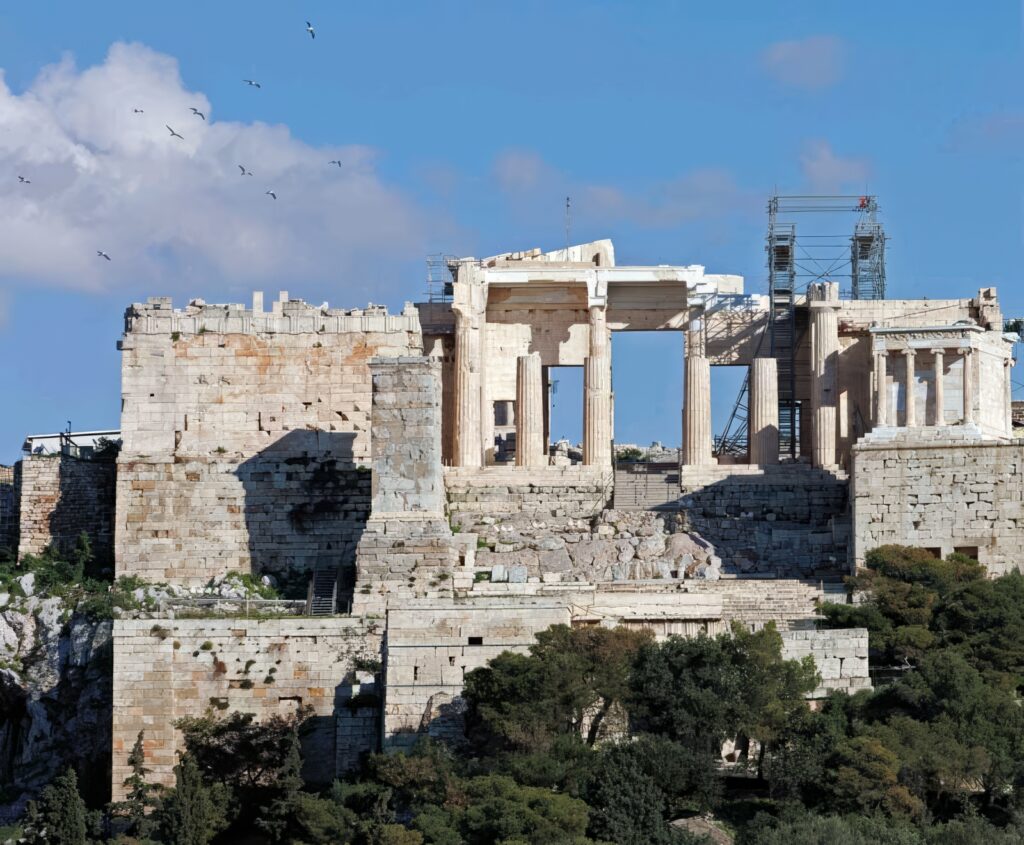
ΠΡΟΠΥΛΑΙΑ
Τα Προπύλαια αποτελούν την είσοδο της Ακρόπολη Αθηνών και οφείλουν την ονομασία τους στη σύνθεση των λέξεων «προ-» και «πύλη», δηλώνοντας τον ρόλο τους ως κεντρικής πύλης του ιερού βράχου. Το κλασικό οικοδόμημα ανεγέρθηκε μεταξύ 437 και 432 π.Χ., στο πλαίσιο του οικοδομικού προγράμματος του Περικλή, σε σχέδια του αρχιτέκτονα Μνησικλή. Κατασκευασμένα κυρίως από πεντελικό μάρμαρο, τα Προπύλαια ακολουθούν δωρικό ρυθμό και οργανώνονται σε κεντρικό τμήμα με δύο εξάστυλες στοές και πέντε θύρες, από τις οποίες η μεσαία ήταν ευρύτερη για τη διέλευση της εκατόμβης. Τρεις ιωνικοί κίονες σε κάθε πλευρά συνέδεαν τη στοά με τις πτέρυγες, ενώ η μαρμάρινη στέγη έφερε διακοσμημένα φατνώματα. Η βόρεια πτέρυγα περιλάμβανε αίθουσα γνωστή ως Πινακοθήκη, διακοσμημένη με ζωγραφικά έργα. Κατά τους μεταγενέστερους αιώνες το μνημείο γνώρισε ποικίλες χρήσεις — ως εκκλησία, κατοικία Φράγκου ηγεμόνα και έδρα Τούρκου φρούραρχου— ενώ υπέστη σοβαρές φθορές, ιδίως από έκρηξη το 1640. Οι πρώτες αναστηλωτικές εργασίες πραγματοποιήθηκαν στις αρχές του 20ού αιώνα, ενώ η σύγχρονη αποκατάσταση ξεκίνησε το 1982 και ολοκληρώθηκε σταδιακά, με το μνημείο να αποδίδεται εκ νέου στο κοινό.
[ΠΗΓΗ: web.archive.org]
PROPYLAEA
The Propylaea serve as the grand entrance to the Acropolis of Athens, with their name derived from the Greek words pro- and pylē, meaning “before the gate,” reflecting their role as the main gateway to the sacred rock. This classical structure was built between 437 and 432 BCE as part of Pericles’ building program, designed by the architect Mnesikles. Constructed primarily from Pentelic marble, the Propylaea follow the Doric order and are organized around a central hall with two six-columned porticoes and five gates, the central one being wider to allow the passage of sacrificial animals. Three Ionic columns on each side connected the hall to the wings, and the marble roof featured decorated coffered ceilings. The northern wing housed a room known as the Pinakotheke, adorned with paintings. Over the centuries, the monument underwent multiple uses—as a church, residence for a Frankish lord, and headquarters for an Ottoman governor—and suffered significant damage, particularly from an explosion in 1640. Early restoration efforts began in the early 20th century, while modern restoration started in 1982 and was carried out gradually, ultimately reopening the monument to the public.