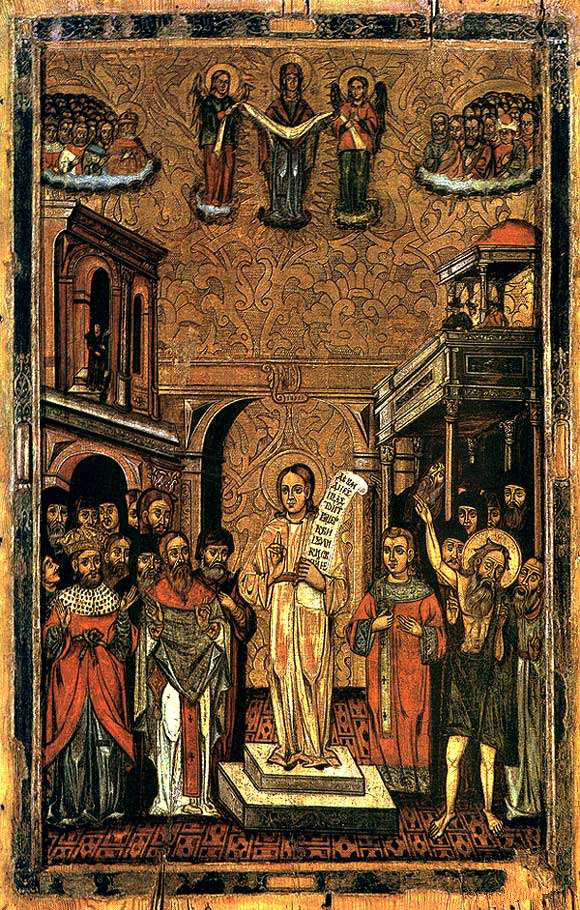
ΡΩΜΑΝΟΣ ΜΕΛΩΔΟΣ
Ο Ρωμανός ο Μελωδός (περ. 490–περ. 556) υπήρξε ένας από τους σημαντικότερους υμνογράφους της βυζαντινής εκκλησιαστικής ποίησης και συχνά αποκαλείται «ο Πίνδαρος της χριστιανικής υμνογραφίας». Γεννήθηκε στην Έμεσα της Συρίας —κατά μία άλλη παράδοση στη Δαμασκό— και, σύμφωνα με πηγές όπως τα Μηναία και τη Σούδα, πιθανόν καταγόταν από εβραϊκή οικογένεια και βαπτίστηκε χριστιανός σε νεαρή ηλικία. Υπηρέτησε ως διάκονος στη Βηρυτό και αργότερα μετέβη στην Κωνσταντινούπολη κατά τη βασιλεία του Αναστάσιος Α΄, όπου συνδέθηκε με τον ναό της Αγίας Σοφίας και έζησε στο μοναστήρι της Θεοτόκου «ἐν τοῖς Κύρου». Η Ορθόδοξη Εκκλησία τον τιμά ως άγιο την 1η Οκτωβρίου. Η παράδοση αναφέρει ότι έλαβε το χάρισμα της υμνογραφίας με θαυμαστό τρόπο, όταν η Θεοτόκος τού εμφανίστηκε σε όραμα και του έδωσε να «καταπιεί» ειλητάριο, συμβολίζοντας τη θεία έμπνευση. Του αποδίδονται περίπου 1.000 κοντάκια, από τα οποία σώζονται 60–80, ποιητικά έργα μεγάλου μήκους με δραματικό χαρακτήρα, θεολογικό βάθος και έντονη λυρικότητα. Διασημότερο θεωρείται το κοντάκιο των Χριστουγέννων «Ἡ Παρθένος σήμερον τὸν Ὑπερούσιον τίκτει». Η γλώσσα του κινείται σε λόγιο, αττικίζον ύφος, με πλούσιες εικόνες, μεταφορές και διαλογική μορφή, στοιχεία που τον καθιστούν κορυφαία μορφή του «Χρυσού Αιώνα» της βυζαντινής υμνογραφίας τον 6ο αιώνα.
Ἦχος γ´. Αὐτόμελον. Ποίημα Ῥωμανοῦ τοῦ Μελῳδοῦ.
Ἡ Παρθένος σήμερον, τὸν ὑπερούσιον τίκτει,
καὶ ἡ γῆ τὸ Σπήλαιον, τῷ ἀπροσίτῳ προσάγει.
Ἄγγελοι μετὰ Ποιμένων δοξολογοῦσι.
Μάγοι δὲ μετὰ ἀστέρος ὁδοιποροῦσι.
Δι᾿ ἡμᾶς γὰρ ἐγεννήθη, Παιδίον νέον,
ὁ πρὸ αἰώνων Θεός.
[ΠΗΓΕΣ: www.users.uoa.gr, www.sansimera.gr]
ROMANOS MELODOS
Romanos the Melodist (c. 490–c. 556) was one of the greatest hymnographers of Byzantine ecclesiastical poetry and is often called “the Pindar of Christian hymnography.” He was born in Emesa, Syria—according to another tradition, in Damascus—and, according to sources such as the Menaia and the Suda, may have been of Jewish origin and converted to Christianity in childhood. He served as a deacon in Beirut and later moved to Constantinople during the reign of Anastasius I, where he was associated with the Hagia Sophia and lived at the Monastery of the Theotokos “en tois Kyrou.” The Orthodox Church commemorates him as a saint on October 1st. Tradition holds that Romanos received his gift for hymnography miraculously when the Virgin Mary appeared to him in a vision and gave him a parchment to “swallow,” symbolizing divine inspiration. He is credited with composing approximately 1,000 kontakia, of which 60–80 survive—long poetic works notable for their dramatic structure, theological depth, and lyrical richness. His most famous hymn is the Christmas kontakion “The Virgin today gives birth to the Superessential One”. His language employs elevated Atticizing Greek, rich imagery, metaphors, and dialogical form, making him a leading figure of the “Golden Age” of Byzantine hymnography in the 6th century.
Excerpt from the kontakion (Tone 3, Automelon):
The Virgin today gives birth to the Superessential One,
and the earth offers the cave to the Unapproachable One.
Angels with the shepherds glorify Him.
Magi follow the star on their journey.
For a newborn Child is born for us,
the God before the ages.