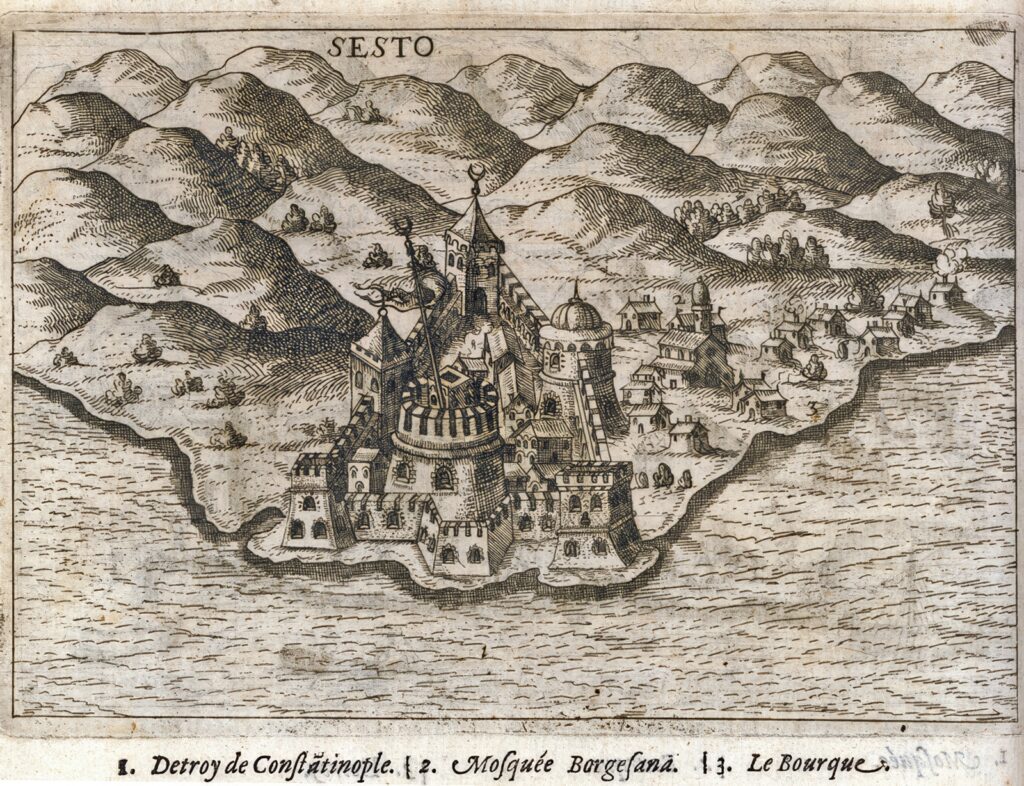
ΣΗΣΤΟΣ
Η Σηστός ήταν αρχαία ελληνική πόλη της Χερσόνησου της Καλλίπολης, κοντά στο στενότερο σημείο του Ελλήσποντου (σημερινά Δαρδανέλλια). Χάρη στη στρατηγική της θέση αποτέλεσε σημαντικό εμπορικό και διαμετακομιστικό κέντρο, ελέγχοντας τη ναυσιπλοΐα μεταξύ Αιγαίου και Εύξεινου Πόντου, αλλά και βασικό πέρασμα μεταξύ Ευρώπης και Ασίας. Αναφέρεται ήδη από τον Όμηρο στην Ιλιάδα ως αιολική αποικία ενώ ο Ηρόδοτος μνημονεύει ότι από εκεί πέρασε ο Δαρείος Α΄ το 513 π.Χ. κατά την επιστροφή του από την εκστρατεία εναντίον των Σκυθών, καθώς και ότι ο Ξέρξης Α΄ διέβη τον Ελλήσποντο με πλωτές γέφυρες το 480 π.Χ. στην εκστρατεία του κατά της Ελλάδας. Μετά τους Περσικούς Πολέμους η Σηστός εντάχθηκε στην Αθηναϊκή Συμμαχία και παρέμεινε υπό αθηναϊκή επιρροή έως το 404 π.Χ., οπότε περιήλθε στη σπαρτιατική κυριαρχία· ακολούθησαν περίοδοι περσικής και εκ νέου αθηναϊκής επιρροής, μέχρι την κατάληψή της από τον Φίλιππο Β΄ της Μακεδονίας τον 4ο αιώνα π.Χ. Το 334 π.Χ. ο Μέγας Αλέξανδρος συγκέντρωσε εκεί τον στρατό του πριν διαβεί στην Ασία.
[ΠΗΓΗ: www.ancientportsantiques.com]
SESTOS
Sestos was an ancient Greek city on the Gallipoli Peninsula, near the narrowest point of the Hellespont (modern Dardanelles). Owing to its strategic location, it became an important commercial and transit center, controlling maritime traffic between the Aegean Sea and the Black Sea, as well as serving as a principal crossing point between Europe and Asia. It is already mentioned by Homer in the Iliad as an Aeolian colony, while Herodotus records that Darius I passed through the city in 513 BCE on his return from the Scythian campaign, and that Xerxes I crossed the Hellespont there in 480 BC by means of pontoon bridges during his expedition against Greece. After the Persian Wars, Sestos joined the Athenian-led Delian League and remained under Athenian influence until 404 BC, when it came under Spartan control. Periods of Persian and renewed Athenian dominance followed, until its capture by Philip II of Macedon in the 4th century BCE. In 334 BCE, Alexander the Great assembled his army there before crossing into Asia.