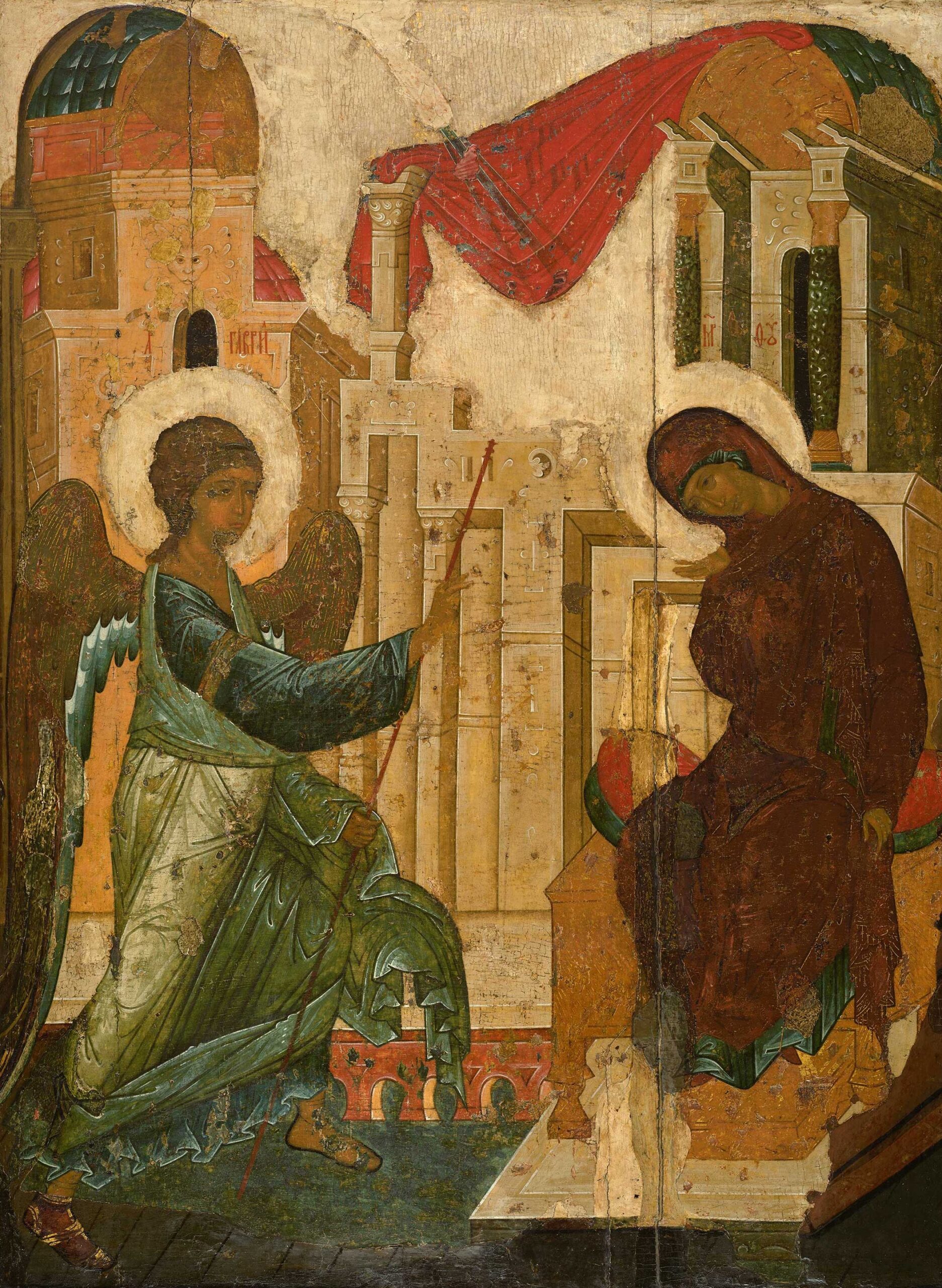
ΕΥΑΓΓΕΛΙΣΜΟΣ
Ο Ευαγγελισμός της Θεοτόκου αποτελεί μία από τις σημαντικότερες εορτές της Ορθόδοξης Εκκλησίας, καθώς σηματοδοτεί την απαρχή της ενανθρώπησης του Υιού και Λόγου του Θεού. Πρόκειται για Δεσποτικοθεομητορική εορτή, διότι συνδέεται αφενός με το πρόσωπο του Χριστού, ο οποίος συλλαμβάνεται εκ Πνεύματος Αγίου στην παρθενική γαστέρα της Μαρίας, και αφετέρου με τη Θεοτόκο, η οποία γίνεται το ανθρώπινο πρόσωπο που συνεργεί στο σχέδιο της θείας οικονομίας. Το γεγονός λαμβάνει χώρα στη Ναζαρέτ, όπου ο Αρχάγγελος Γαβριήλ αναγγέλλει στη Μαρία την εκπλήρωση της θείας βουλής με τον χαιρετισμό «Χαίρε, κεχαριτωμένη, ο Κύριος μετά σου». Η ελεύθερη και ταπεινή αποδοχή της Παρθένου, «Ιδού η δούλη Κυρίου· γένοιτό μοι κατά το ρήμα σου», αποτελεί καθοριστική στιγμή στην ιστορία της σωτηρίας, καθώς μέσω αυτής ανοίγει ο δρόμος για την ένωση του θείου και του ανθρώπινου στο πρόσωπο του Χριστού. Η εορτή της 25ης Μαρτίου συνδέεται στον ελληνικό χώρο και με την εθνική παλιγγενεσία, υποδηλώνοντας τη συμβολική συνάντηση πνευματικής και ιστορικής ελευθερίας. Η θέση της Θεοτόκου στην Εκκλησία θεμελιώνεται στη Χριστολογία, αφού η τιμή προς το πρόσωπό της πηγάζει από τη σχέση της με τον Χριστό. Ο Ευαγγελισμός, επομένως, αποτελεί το γεγονός εκείνο που φανερώνει την έναρξη της σωτηρίας και την ανανέωση της ανθρώπινης ιστορίας.
[Πηγές: sansimera.gr, pemptousia.gr]
EVAGGELISMOS (ANNUNCIATION)
The Annunciation of the Theotokos is one of the most important feasts of the Orthodox Church, as it marks the beginning of the Incarnation of the Son and Word of God. It is a feast that honors both Christ and the Mother of God because it is connected, on the one hand, to the person of Christ, who is conceived by the Holy Spirit in the virginal womb of Mary, and, on the other hand, to the Mother of God, who becomes the human participant cooperating in the plan of divine providence. The event takes place in Nazareth, where the Archangel Gabriel announces to Mary the fulfillment of the divine will with the greeting, “Hail, full of grace, the Lord is with you.” The Virgin’s free and humble acceptance—“Behold, I am the handmaid of the Lord; let it be to me according to your word”—constitutes a defining moment in the history of salvation, as it paves the way for the union of the divine and human natures in the person of Christ. In Greece, the feast of March 25 is also associated with national rebirth, signifying the symbolic convergence of spiritual and historical freedom. The Virgin Mary’s place within the Church is grounded in Christology, since the honor bestowed upon her derives from her relationship with Christ. The Annunciation, therefore, is the event that marks the beginning of salvation and the renewal of human history.