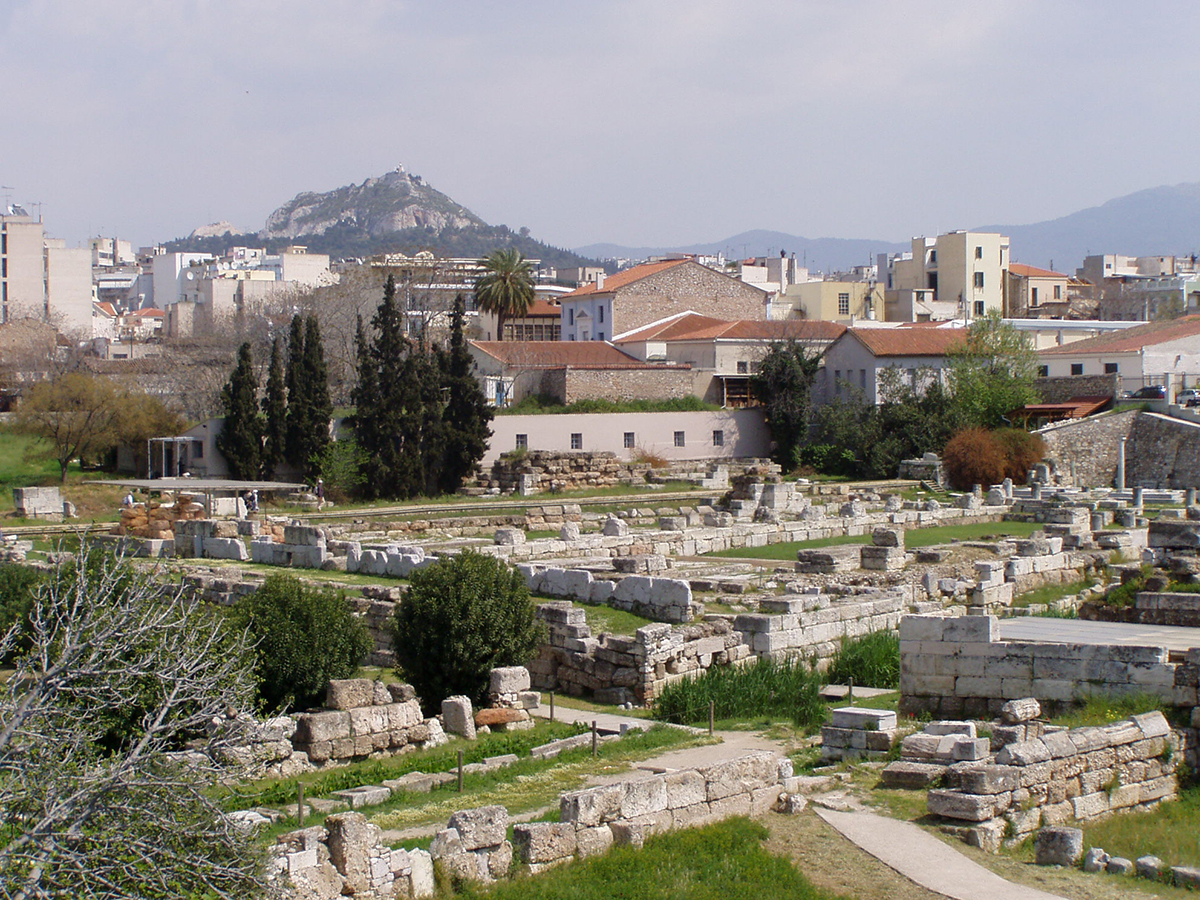
ΚΕΡΑΜΕΙΚΟΣ
Ο Κεραμικός αποτελεί μια από τις πιο φορτισμένες περιοχές της Αθήνας από στοιχεία του αρχαιοελληνικού πολιτισμού. Στην περιοχή εκτείνονταν τα μεγαλύτερα νεκροταφεία της πόλης, όπου τιμούνταν κυρίως νεκροί που πρόσφεραν στην πόλη και η ταφή τους γίνονταν με δημόσια δαπάνη. Το νεκροταφείο λειτούργησε από την πρώιμη εποχή του Χαλκού (3200-2000 π.Χ.) μέχρι και τον 6ο αιώνα μ.Χ. Ο χώρος δεν χρησιμοποιούνταν αποκλειστικά ως νεκροταφείο, η ονομασία του προέρχεται από τα εργαστήρια αγγείων, τα οποία φαίνεται να υπήρχαν στην περιοχή. Γενικά αποτελεί ένα μωσαϊκό αρχαιοελληνικού πολιτισμού, με διάφορες συνήθειες των αρχαίων Αθηναίων να συμβαίνουν στην περιοχή αυτή. Η μεγάλη αυτή σημασία έδωσε και το όνομα του Κεραμικού στην οδό ως ένδειξη τιμής στον αρχαιοελληνικό πολιτισμό.
[Πηγές: www.news247.gr, www.efaathculture.gr]
KERAMIKOS
Kerameikos is one of the most important areas of Athens, inextricably linked to ancient Greek civilization. The city’s principal cemeteries were located here, where individuals who had rendered significant services to Athens were primarily buried, with their funerals funded by the state. The cemetery remained in use from the Early Bronze Age (3200–2000 B.C.) until the 6th century A.D. However, the site was not used exclusively as a cemetery. Its name derives from the pottery and ceramic workshops that operated in the area. Overall, Kerameikos constitutes a unique complex of monuments and archaeological remains of ancient Greek civilization, reflecting many aspects of the daily life, funerary customs, and public ceremonies of the ancient Athenians. The exceptional historical and cultural significance of Kerameikos led to the street being named in its honor, as a tribute to ancient Greek civilization.