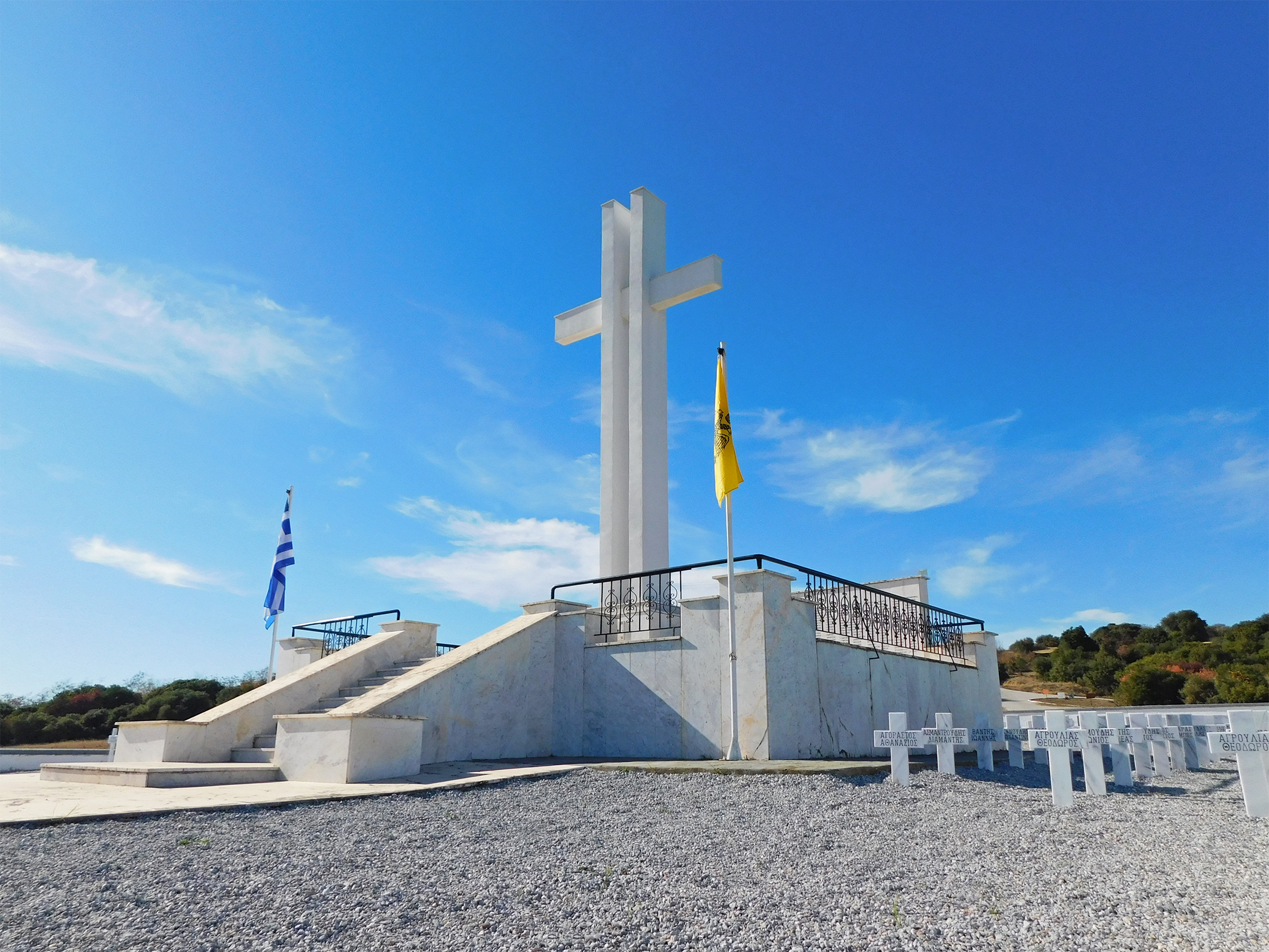
ΚΕΡΔΥΛΛΙΑ
Το όνομα αυτό αναφέρεται στα Άνω και Κάτω Κερδύλλια, δύο χωριά που σβήστηκαν από τον χάρτη μετά την πυρπόλησή τους από τις ομάδες κατοχής των Ναζί στην Ελλάδα. 17 Οκτωβρίου 1941, 2 λόχοι του ναζιστικού στρατού συγκέντρωσαν όλους τους κατοίκους των δύο χωριών, τις γυναίκες, τα παιδιά έως 15 ετών και τους άνδρες πάνω από 60, τους ανάγκασαν να μαζέψουν ταχύτατα όσα πράγματα μπορούσαν και να εγκαταλείψουν τον τόπο τους. Τους άνδρες 15 με 60 τους εκτέλεσαν εν ψυχρώ οι 230 στρατιώτες που κατέστρεψαν και τα χωριά. Οι νεκροί ανέρχονται από τους 212 έως τους 230, τα πτώματα των οποίων θάφτηκαν σε ομαδικό τάφο από τους υπερήλικους κατοίκους, που δεν εκτελέστηκαν. Δικαιολογία για τους Γερμανούς υπήρξε η βοήθεια που έδωσαν ορισμένοι κάτοικοι στους αντάρτες της περιοχής. Μάλιστα αφορμή για την έναρξη της έρευνας ήταν η καταγγελία από τον Δημήτρη Κίκηρα, έναν κάτοικο των Κάτω Κερδυλλίων, ως αντίποινα προς τους άνδρες των χωριών. Η καταστροφή των Κερδυλλίων αποτέλεσε το πρώτο έγκλημα πολέμου από τη Ναζιστική Γερμανία προς την Ελλάδα. Στην οδό δόθηκε το όνομα ως φόρο τιμής προς τους πεσόντες της σφαγής.
[Πηγές: www.kathimerini.gr, www.mixanitouxronou.gr]
KERDYLLIA
This name refers to Ano and Kato Kerdyllia, two villages that were wiped off the map after being burned to the ground by German occupation forces during the Occupation. On October 17, 1941, two companies of the German Army rounded up all the residents of the two villages. Women, children up to the age of 15, and men over the age of 60 were forced to hastily gather whatever belongings they could and leave their villages. In contrast, all men between the ages of 15 and 60 were executed in cold blood by approximately 230 German soldiers, who then set fire to and completely destroyed the two villages. The number of victims is estimated to have been between 212 and 230. Their bodies were buried in a mass grave by the elderly residents who had survived the massacre. As a pretext for the massacre, the German authorities cited the alleged assistance that certain residents had provided to the local resistance fighters. According to the sources, the operation was triggered by a denunciation made by Dimitris Kikiras, a resident of Kato Kerdyllia, which was used as the basis for carrying out reprisals against the villagers. The destruction of Kerdyllia is considered the first mass war crime committed by Nazi Germany in occupied Greece. The street was named in memory of the victims of the massacre.