ΠΕΡΓΑΜΟΣ
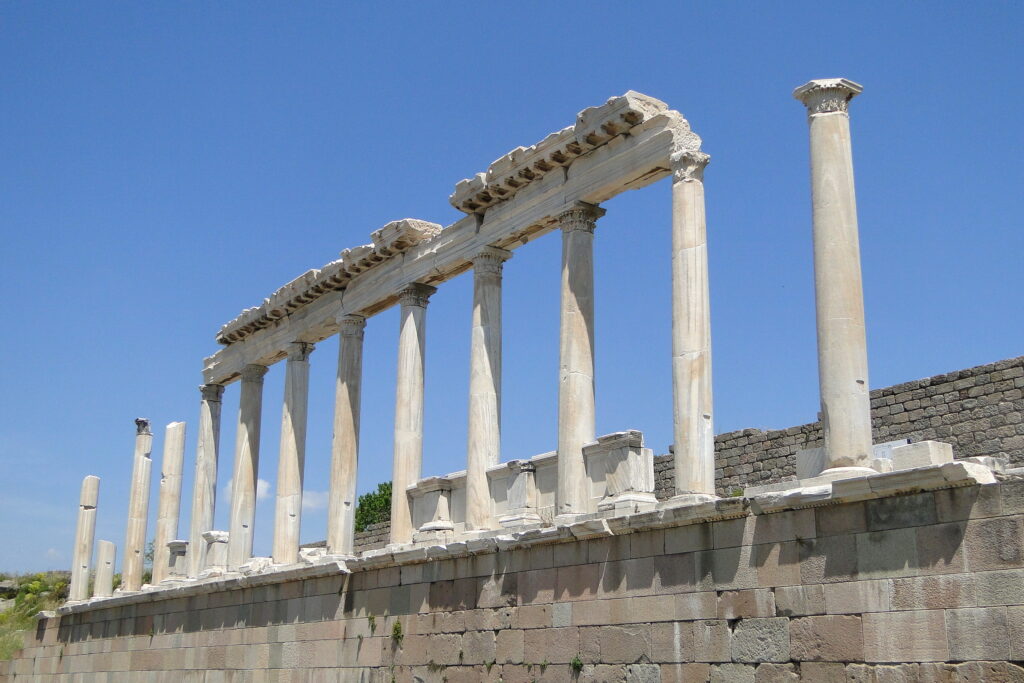
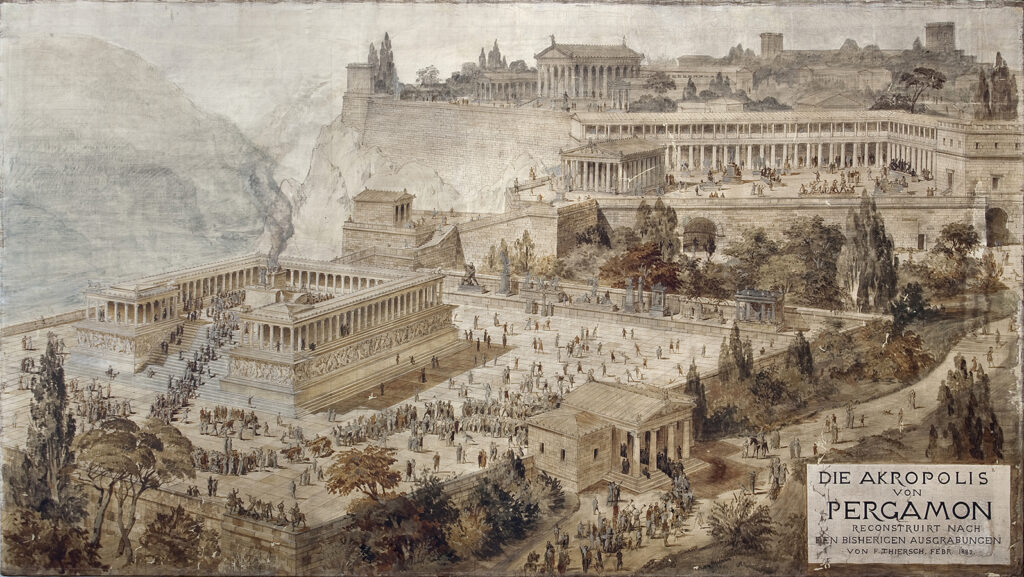
Η Πέργαμος ήταν μία από τις σπουδαιότερες ελληνικές πόλεις της Μικράς Ασίας, με ιστορία που ξεκινά ήδη από την αρχαϊκή περίοδο. Βρισκόταν στη βορειοδυτική Μικρά Ασία, κοντά στη σημερινή πόλη Μπέργκαμα της Τουρκίας, και γνώρισε τη μεγαλύτερη ακμή της κατά τον 3ο και 2ο αιώνα π.Χ., όταν έγινε πρωτεύουσα του ελληνιστικού βασιλείου των Ατταλιδών. Υπό τη δυναστεία αυτή εξελίχθηκε σε σημαντικό πολιτικό, πνευματικό και καλλιτεχνικό κέντρο του αρχαίου κόσμου, ανταγωνιζόμενη ακόμη και την Αθήνα και την Αλεξάνδρεια. Η περίφημη Βιβλιοθήκη της Περγάμου συγκαταλεγόταν στις σημαντικότερες της αρχαιότητας και, σύμφωνα με την παράδοση, η ανάγκη για νέο υλικό γραφής οδήγησε στην ευρεία χρήση της περγαμηνής, καθώς περιορίστηκε η προμήθεια παπύρου από την Αίγυπτο. Σπουδαίο μνημείο της πόλης ήταν ο Βωμός του Δία, με τη μνημειώδη ζωφόρο της Γιγαντομαχίας, κορυφαίο έργο της ελληνιστικής γλυπτικής. Στα τέλη του 19ου αιώνα, γερμανικές ανασκαφές έφεραν στο φως σημαντικά ευρήματα, πολλά από τα οποία μεταφέρθηκαν στο Βερολίνο. Η Πέργαμος αποτελεί σήμερα σύμβολο της πολιτιστικής ακμής του ελληνιστικού κόσμου.
[ΠΗΓΗ: www.sansimera.gr]
PERGAMON
Pergamon was one of the most important Greek cities of Asia Minor, with a history dating back to the Archaic period. Located in northwestern Asia Minor, near the modern-day city of Bergama in Turkey, it reached its greatest prosperity during the 3rd and 2nd centuries BC, when it became the capital of the Hellenistic Kingdom of the Attalids. Under the rule of the Attalid dynasty, Pergamon developed into a major political, intellectual, and artistic center of the ancient world, rivaling even Athens and Alexandria. The renowned Library of Pergamon was one of the most significant libraries of antiquity. According to tradition, the need for an alternative writing material led to the widespread use of parchment when the supply of papyrus from Egypt was restricted. One of the city’s most remarkable monuments was the Altar of Zeus, decorated with the monumental frieze of the Gigantomachy, a masterpiece of Hellenistic sculpture. In the late 19th century, German archaeologists conducted excavations at the site, uncovering important antiquities, many of which were transferred to Berlin. Today, Pergamon remains a symbol of the cultural and artistic achievements of the Hellenistic world.