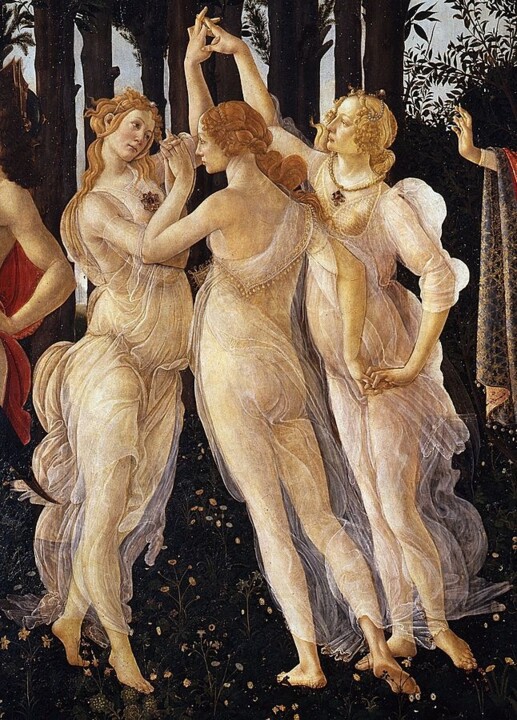
ΧΑΡΙΤΕΣ
Οι Χάριτες ήταν από τις πιο αγαπητές θεότητες της αρχαίας ελληνικής μυθολογίας, προσωποποιώντας την ομορφιά, τη χαρά, τη χάρη, τη γονιμότητα και την ευεργεσία. Σύμφωνα με την επικρατέστερη παράδοση του Ησιόδου, ήταν οι τρεις κόρες του Δία και της Ευρυνόμης: η Αγλαΐα, η Ευφροσύνη και η Θάλεια, αν και άλλοι μύθοι αποδίδουν διαφορετική καταγωγή και αριθμό. Συνδέονταν στενά με την Αφροδίτη, την οποία συνόδευαν και φρόντιζαν, ενώ συμμετείχαν μαζί με τις Μούσες στις γιορτές των θεών, εμπνέοντας την ποίηση, τη μουσική, τον χορό και τις τέχνες. Λατρεύονταν σε πολλές περιοχές του ελληνικού κόσμου, με σημαντικότερο κέντρο τον Ορχομενό, όπου σύμφωνα με την παράδοση ιδρύθηκε το αρχαιότερο ιερό τους και τελούνταν τα Χαριτήσια, αγώνες μουσικής και ποίησης. Στην τέχνη απεικονίζονταν ως νέες και όμορφες γυναίκες, σύμβολα αρμονίας, δημιουργικότητας και της ευεργετικής σχέσης μεταξύ θεών, ανθρώπων και φύσης. Για την απεικόνιση των Χαρίτων, ο Παυσανίας έγραψε:
“Δεν θα μπορούσα να ανακαλύψω ποιός ήταν αυτός πού απεικόνισε πρώτος τις Χάριτες γυμνές, είτε στην γλυπτική ή στην ζωγραφική. Κατά τους πρότερους χρόνους, φυσικά, και οι γλύπτες και οι ζωγράφοι τις απεικόνιζαν σκεπασμένες. […]Αλλά οι μεταγενέστεροι καλλιτέχνες, δεν γνωρίζω τον λόγο, άλλαξαν τον τρόπο που τις απεικόνιζαν. Βεβαίως οι σημερινοί γλύπτες και ζωγράφοι απεικονίζουν τις Χάριτες γυμνές” Οι τρεις Χάριτες αποτέλεσαν έμπνευση για πολύ δημοφιλή ελληνική σειρά που προβλήθηκε στον τηλεοπτικό σταθμό Mega Channel τις τηλεοπτικές περιόδους 1989-1990.
[ΠΗΓΗ: www.orchomenos.gr]
THE GRACES
The Graces were among the most beloved deities of ancient Greek mythology, personifying beauty, joy, grace, fertility, and generosity. According to the most widely accepted tradition, as described by Hesiod, they were the three daughters of Zeus and Eurynome: Aglaia, Euphrosyne, and Thalia, although other myths attribute different parentage and even different numbers to them. The Graces were closely associated with Aphrodite, whom they accompanied and attended, and they participated alongside the Muses in the festivals of the gods, inspiring poetry, music, dance, and the arts. They were worshipped throughout the Greek world, with Orchomenos regarded as their principal cult centre. According to tradition, their oldest sanctuary was established there, and the Charitesia, festivals celebrating music and poetry, were held in their honour. In ancient art, the Graces were depicted as young and beautiful women, symbolising harmony, creativity, and the harmonious relationship between gods, humans, and nature. Regarding their depiction, Pausanias wrote:
“I could not discover who was the first to depict the Graces nude, whether in sculpture or painting. In earlier times, both sculptors and painters represented them clothed. […] But later artists—I do not know why—changed the way they depicted them. Certainly, the sculptors and painters of my own day represent the Graces nude.”
The Three Graces also inspired the title of a popular Greek television comedy series, Oi Treis Charites (The Three Graces), which aired on Mega Channel during the 1989–1990 television seasons.